Row
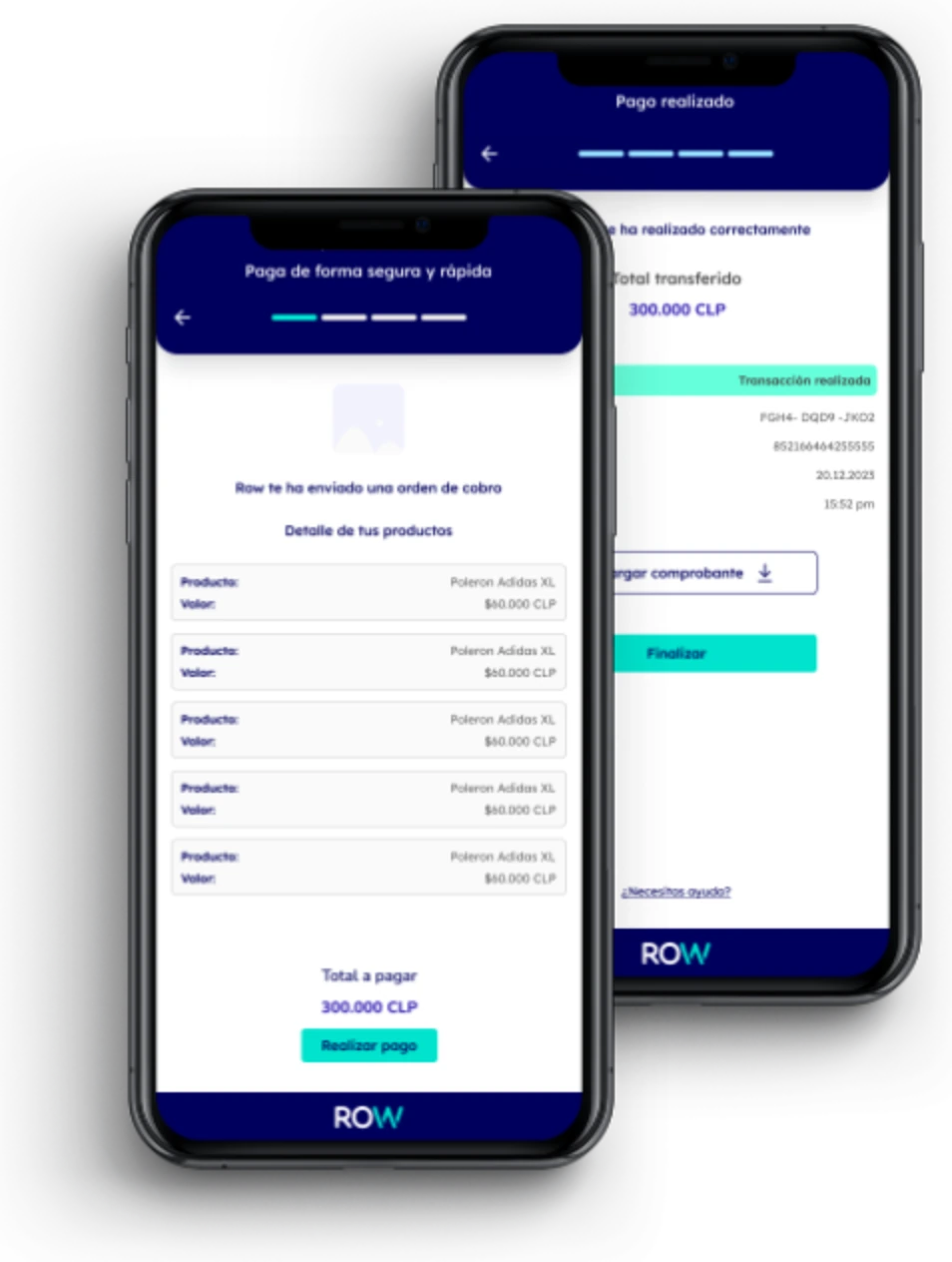
Secure payment link to send and receive payments locally and cross-border, with fast, low-cost and transparent transfers.

“Transparency and efficiency in every order”
Design process behind ClientHub: a platform for managing and tracking On and Off ramp transactions.
Challenge
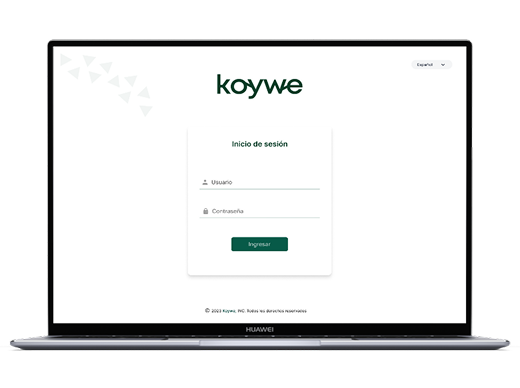
ClientHub was built for Koywe's “B2B” clients, so they can check the status of their orders and manage their transactions without having to verify through technical support.
Goals
I designed a platform to improve the communication channels Koywe's clients have with Customer Support, since generating too many tickets in the back office causes long response times. That's why we decided to create a system so clients can review their orders faster.
My role
I led product design (user experience (UX) and user interface (UI)). I also held several meetings with developers and stakeholders to gather constructive feedback and gain a broader vision of the product.
Process
Research
The interview sample considered a total of 5 stakeholders: 4 men and 1 woman, aged between 30 and 55, from Chile, Argentina and Mexico. Each interview lasted approximately 30 minutes.
The questions asked were the following:
For the interview sample we used a continuous Discovery process that considered a total of 10 clients from Hapi (our strongest client), of which 8 were men and 2 women, aged 30 to 48, from Mexico. Each interview lasted approximately 30 minutes.
The questions asked were the following:
After analyzing the interviews and reviewing the data provided, the following results were obtained:
| Metric | Insight |
|---|---|
| 90% | Dissatisfied with the current transaction and order process. |
| 80% | Prefers WhatsApp as the notification channel. |
| 40% | Has used similar platforms to manage transactions and orders. |
| 100% | Has response times over 5 hours. |
The solution
Create a platform so our clients can access information about their on-ramp and off-ramp orders much faster, allowing them to run more agile processes with their users and, in turn, reduce tickets in Koywe's back office (support).
It's a platform with a tracking service for the On ramp and Off ramp orders that our clients' users usually make. It also allows changes to relevant data such as: updating banking information, uploading transfer receipts, learning in detail the types of user of each client, and generating reports for finance or accounting teams.
User personas
Wireframes
The wireframes were designed to define the structure and information architecture, ensuring an intuitive experience for users.
Interface
Since the platform is made for users to run faster queries instead of going to support and dragging out their process, it's important that users can naturally understand this value proposition.
It's not only about reviewing orders and transactions, but about streamlining their processes so our clients can be more satisfied with the services provided.
Taking the brand colors into account, they were selected for different attributes within the interface.
Since ClientHub's users will be Koywe's clients, the “Inter” typeface was chosen to give more legibility to each screen it adapts to.
| Heading | Text |
|---|---|
| Inter Bold 30 px | Inter Medium 16 px |
| Inter SemiBold 26 px | Inter Regular 16 px |
| Inter Medium 20 px | Inter Medium 14 px |
| Inter Bold 16 px | Inter Regular 14 px |
| Inter Medium 16 px | Inter Regular 12 px |
| Inter Bold 14 px |
Testing
Different edge cases were run to detect whether there were functionalities that weren't added or were overlooked. Functional tests were also carried out with the animated screens so developers could guide themselves in the implementation of ClientHub.
Validation
We decided to run tests with the animated Figma prototypes to speed up the feedback process. For validation, we chose to call Hapi's clients. In some cases, A/B tests were used to consider their opinion, which gave excellent results.
Now that this is done, launching the platform is only part of the process, since they must work iteratively on ClientHub to achieve better satisfaction for their clients.
I want to give a huge thank you to the Hapi collaborators for taking part in the different interviews.
Also to those who gave me feedback to improve the platform; Agustin Torres, Aldo Fabro, Francisco Jordan Cergnar, Sebastian Villanueva and Kenneth Peet.